


05Jun
New Hatchery Built!
We are happy to announce that we have rebuilt and revamped the hatcheries in Quepos and Jacó! With the assistance of our lovely interns from Texas A&M and the University of Perpignan - Domitian, we have been able to bring these two hatcheries back to life and improve them for future nesting seasons.
|
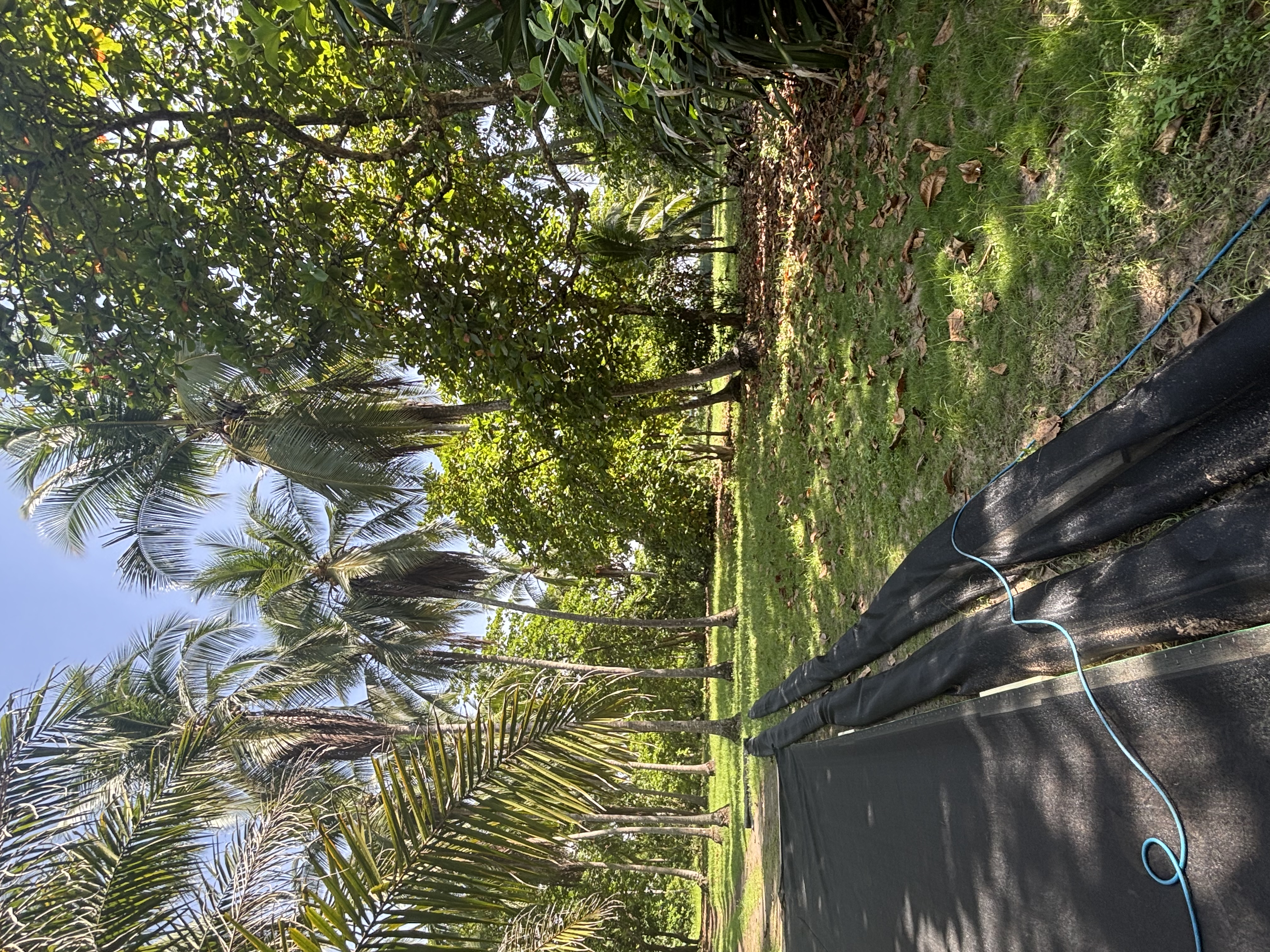
Starting with the location in Parrita, the interns, assistant Dani, and leader Dustin worked together to build the columns that support the walls. By layering pieces of wood together, they created a strong and sturdy base. The beams have a rectangular foundation at the bottom, which acts as an additional source of support to help the structure withstand the wind, rain, and other weather conditions that come with being located on the beach. After all of the wall sections were created, a layer of mesh was carefully stapled onto the wooden frames. This mesh will help protect the inside of the hatchery from outside debris, animals, and other potential disturbances, creating a safer environment for the eggs placed inside. Once the mesh was securely attached to the wooden frames, the wall sections were complete.
|
 |
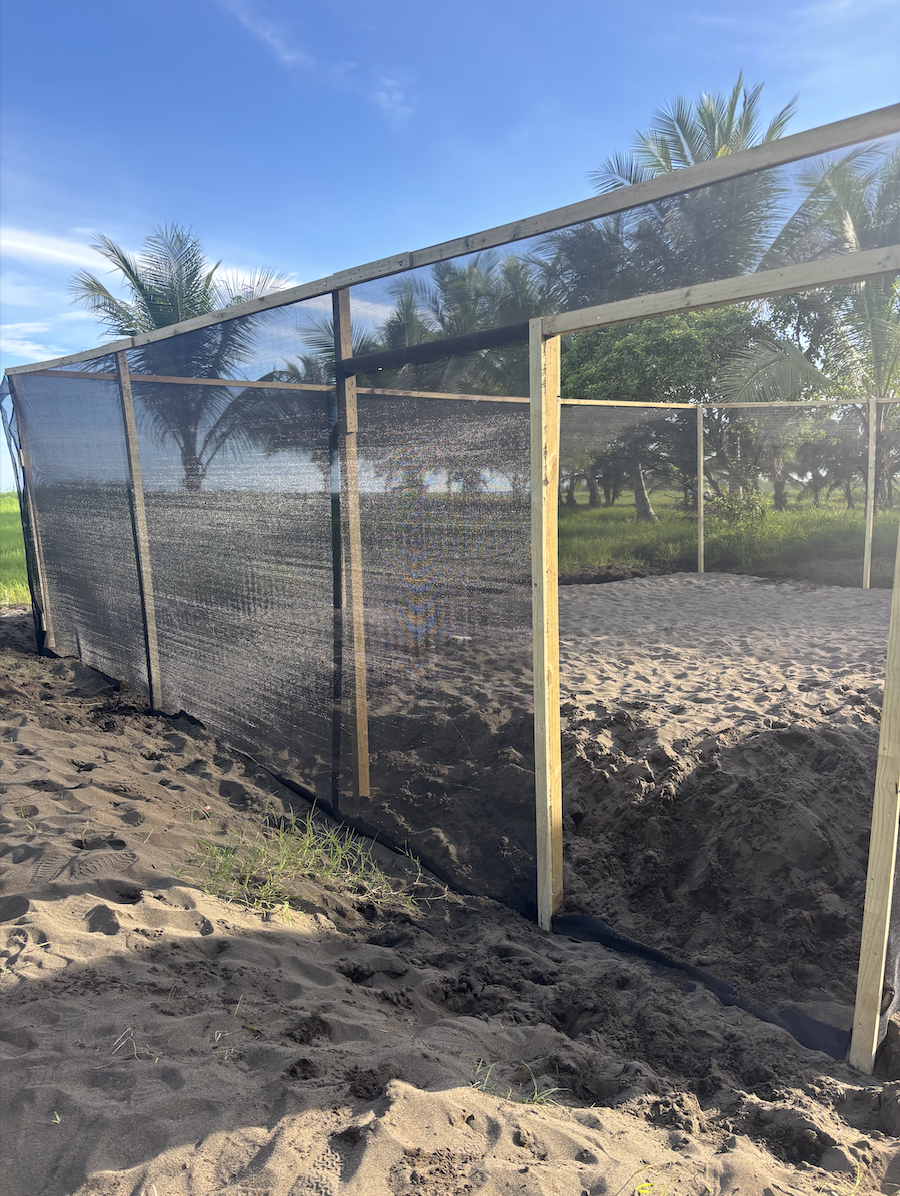 |
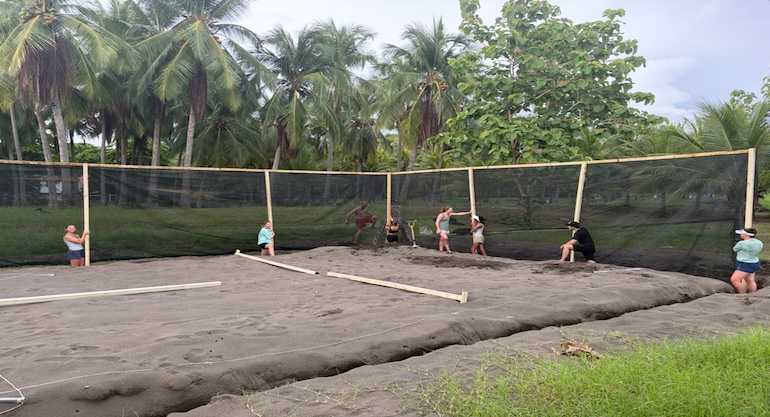
After applying the mesh to all of the beams, it was time to begin constructing the overall structure. We were grateful to have additional volunteers come and help put everything together. We carried the completed wall sections over to the hatchery area. At the beginning of the project, the site was simply a pile of sand with trenches dug out to indicate where the posts would be placed. We laid each section out in its designated location and prepared to raise the structure. We then split into groups, with some volunteers positioned inside the structure and others on the outside. Working together, we carefully hoisted the walls upright and guided the posts into the sand while waiting for additional help to secure everything into place. Once the walls were standing, the team focused on ensuring that the structure was properly aligned and stable before moving on to the next steps of construction. Building on the beach presented its own unique challenges, including uneven terrain, intense heat, and shifting sand. Despite these obstacles, the team remained committed to the project and worked together to find solutions. Their teamwork, determination, and willingness to help one another played a major role in the successful completion of this phase of the hatchery. |
The restoration of these hatcheries is an important step toward protecting local sea turtle populations. By creating a secure environment for nests, the hatcheries help increase the chances of eggs developing safely until they are ready to hatch. Projects like these rely heavily on the support of volunteers and community members, making their contributions invaluable. Seeing the transformation from a simple pile of sand to a functional hatchery was incredibly rewarding and serves as a reminder of what can be accomplished when people come together in support of conservation efforts.